
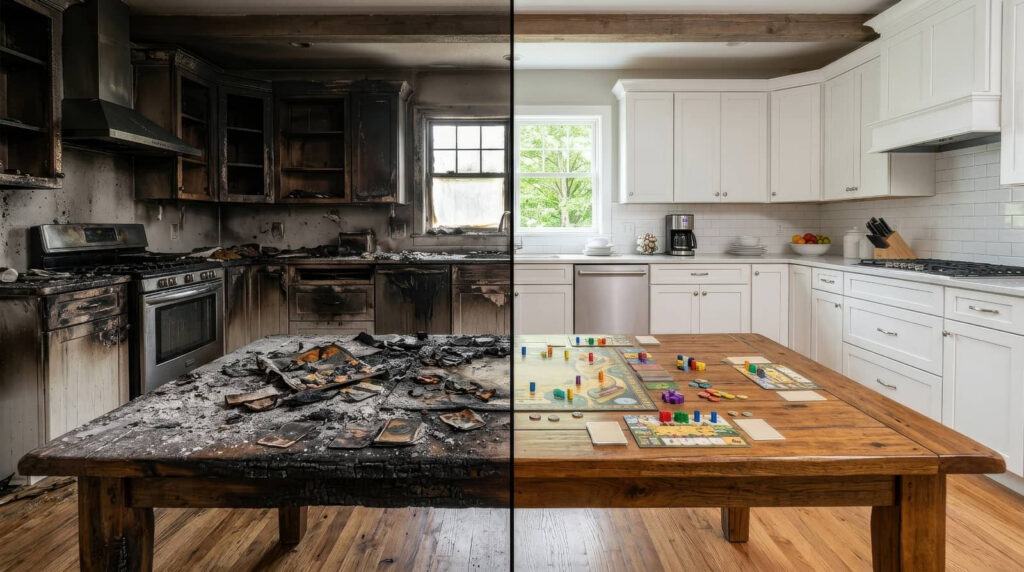
What you may not know is that smoke damage keeps working long after the fire is out, as soot and acidic residues keep settling into surfaces and airways. You need to secure the property, remove contamination fast, and control odors before they bind to walls, fabrics, and hidden cavities. The right cleanup steps can protect both your structure and your health, but the order you follow changes everything.
Key Takeaways
- Begin cleanup quickly to stop soot from bonding, staining surfaces, and causing permanent odor problems.
- Assess each room for porous and nonporous materials before cleaning to choose the right restoration method.
- Remove soot with HEPA vacuuming, dry sponges, and approved cleaners, working from top to bottom.
- Improve air quality by ventilating the home, replacing HVAC filters, and using odor-neutralizing treatments.
- Call professionals if smoke damage reaches walls, HVAC systems, or hidden areas beyond simple surface cleaning.
What Smoke Damage Cleanup Includes
Smoke damage cleanup includes removing soot, residue, and lingering odors from walls, ceilings, floors, furniture, and other affected surfaces.
You’ll see technicians assess each room, identify porous and nonporous materials, and choose the right cleaning method for each surface.
During smoke damage cleanup after a fire, they may use dry sponges, specialized detergents, HEPA vacuuming, and odor-neutralizing treatments to restore usable areas.
You can expect careful attention to vents, trim, fabrics, and hidden deposits where smoke settles.
This process also helps stabilize materials before further restoration begins.
When you work with a trained team, you’re not facing the damage alone; you’re joining a clear, structured recovery process built to protect your space and help it feel livable again.
Why Fast Cleanup Matters
Fast cleanup matters because smoke residue keeps reacting with surfaces, which can increase staining, corrosion, and other secondary damage.
If you act quickly, you can also stop odors from setting into porous materials and HVAC pathways.
Prompt cleaning gives you a better chance to protect salvageable materials before the contamination becomes permanent.
Preventing Further Damage
When cleanup starts quickly, you reduce the chance that soot and residue will etch surfaces, stain materials, and spread odors deeper into your property.
You also limit corrosion on metal fixtures, dulling on glass, and discoloration on painted walls, fabrics, and flooring.
By acting fast, you help protect structural materials before moisture from firefighting efforts lets contaminants bind more tightly.
You’re not just cleaning what you can see; you’re stopping hidden damage from advancing into seams, vents, and porous materials.
That early response gives your home or business a better recovery path and helps you stay in control during a stressful time.
With the right process, you can preserve more of what belongs to you and restore your space with greater confidence and less loss.
Stopping Odor Set-In
Quick cleanup also keeps smoke odors from settling into materials and becoming harder to remove. When you act fast, you limit the time airborne particles have to bond with porous surfaces, seams, and hidden cavities.
That matters because heat opens tiny paths that let odor molecules sink deeper as materials cool. You’ll improve results by ventilating the space, removing soot before it hardens, and using targeted deodorization methods right away.
Each hour counts, since lingering residues can re-emit odors and make the whole area feel contaminated. By responding early, you give your home a cleaner reset and reduce the chance that smoke smells become part of daily life.
You’re not alone in this process; prompt, methodical cleanup helps restore a healthier, more comfortable environment for everyone.
Protecting Salvageable Materials
The sooner you start smoke damage cleanup, the better you can protect materials that may still be salvageable. You reduce the time soot has to etch metal, stain fabric, and corrode electronics.
Quick action also limits moisture buildup from firefighting, which can weaken wood, drywall, and paper goods. When you sort affected items fast, you can isolate restore-ready materials from those that need disposal, saving time and expense.
You’ll also make it easier for your restoration team to document damage and apply the right cleaning methods. That matters because every surface reacts differently to smoke residue.
How to Secure the Property First
Before you start cleanup, you need to assess the structure for visible damage, instability, or unsafe conditions that could make entry hazardous.
Next, block access points with locks, tarps, or temporary barriers to reduce unauthorized entry and further contamination.
You should also protect exposed openings, such as broken windows or damaged doors, to keep out weather, debris, and pests.
Assess Structural Safety
After a fire, you need to confirm the structure is safe before you start any smoke damage cleanup. You should inspect load-bearing walls, floors, ceilings, and rooflines for sagging, cracking, or shifting.
If you notice warped framing, hot spots, exposed wiring, or the smell of gas, stop and contact qualified emergency or structural professionals right away. You’re not alone in this step; careful evaluation helps protect everyone entering the property.
Wear sturdy shoes, gloves, and a respirator if you must briefly enter a damaged area. Avoid moving debris that could hide instability.
Document visible damage with photos from a safe distance, then wait for clearance before cleanup begins. This cautious approach reduces injury risk and sets your recovery on solid ground.
Block Entry Points
Once you’ve confirmed the structure is stable enough to approach, secure the property by blocking open entry points and limiting outside exposure.
You can start by closing and locking doors, then use temporary barriers to restrict access where needed. This step helps you protect the interior from wind, rain, pests, and unauthorized entry while you prepare for cleanup.
If locks are damaged, use a temporary latch or secure covering approved for emergency stabilization. Keep a clear record of which areas you’ve restricted so your cleanup team can move efficiently and safely.
By taking control of entry points early, you reduce added contamination and keep the site more manageable.
You’re not handling this alone; each careful action supports the recovery process and helps your property stay ready for the next phase.
Protect Exposed Openings
Cover exposed openings as soon as the structure is safe to enter so you can limit further smoke damage and moisture intrusion. You’ll want to board broken windows, seal damaged doors, and cover roof gaps with weatherproof tarps or sheeting.
These temporary barriers help keep rain, wind, dust, and pests out while you plan restoration. Use sturdy materials, fasten them securely, and check that sharp edges or unstable sections won’t create new hazards.
If utilities are still active, coordinate with licensed professionals before you work near wiring or gas lines. Protecting openings early gives your cleanup team a safer, more controlled environment, and it helps your home or business stay part of the community you’re rebuilding with.
Remove Smoke Soot Before It Sets
You should remove smoke soot as soon as possible because it can bond to surfaces and become much harder to clean.
Use dry-cleaning sponges or HEPA vacuuming first to lift loose particles without smearing them. Work top to bottom so debris doesn’t fall onto cleaned areas, and change cloths often to avoid re-depositing residue.
For painted walls, sealed wood, and hard trim, apply a mild cleaner approved for soot removal, then wipe gently with minimal moisture. Test any product in a small hidden area before you proceed.
If you stay systematic, you’ll limit staining, corrosion, and long-term surface damage. You’re not handling this alone; careful early cleaning gives your space the best chance to recover cleanly and safely.
Remove Smoke Odor From Rooms
Smoke odor lingers because porous materials trap microscopic particles, so room deodorizing has to start with thorough source removal and ventilation. You should open windows, run exhaust fans, and replace HVAC filters to move contaminated air out fast.
Next, place activated charcoal, baking soda, or professional odor absorbers in closed rooms to capture remaining vapors. Use an air scrubber with HEPA and carbon filtration if the smell persists, since it can reduce fine particles and gases together.
Keep humidity low, because moisture can reactivate odor compounds. If you’re managing several rooms, treat each space separately so no pocket of smoke remains.
With steady airflow and proper filtration, you can reclaim a cleaner, safer indoor environment and feel at home again sooner.
Clean Walls, Ceilings, and Fixtures
You should wipe soot from walls and other hard surfaces with a dry or lightly damp microfiber cloth, working from the top down to prevent streaking.
Next, clean ceiling residue carefully with the right cleaner for the surface so you don’t spread contaminants or damage finishes.
Then restore light fixtures by removing buildup, drying components fully, and checking that all parts are safe before you reinstall them.
Wipe Soot From Surfaces
Start by gently wiping soot from walls, ceilings, and fixtures with a dry or slightly damp microfiber cloth to lift loose residue without spreading it further.
Work in small sections, using light pressure and straight strokes so you don’t grind particles into the finish. Replace cloths as soon as they darken to keep cleanup effective and prevent cross-contamination.
If you’re joining others in recovery, stay consistent and methodical; steady technique protects painted surfaces, trim, and light fixtures from extra wear.
Keep the area well ventilated, and don’t over-wet porous materials, since moisture can set stains.
As you remove soot, inspect the surface for any remaining film. You’re not just cleaning—you’re restoring a safer, fresher space for everyone who belongs there.
Clean Ceiling Residue
Once the loose soot is gone, clean ceiling residue with a dry-cleaning sponge or a lightly damp microfiber cloth, working from the top down to prevent streaks and drips onto already cleaned areas.
You’ll keep pressure light so you don’t grind particles into painted surfaces or texture. Rinse or replace your cloth often to avoid spreading contamination.
If you see stubborn film, use a manufacturer-approved cleaner mixed to label directions and test it first on a hidden spot. Work in small sections so you can track what’s been cleaned and stay consistent across the room.
As you move, you’re restoring a healthier space for everyone in your home, one careful pass at a time. Let each section dry before checking for any remaining haze or residue.
Restore Light Fixtures
Next, restore light fixtures so they don’t keep holding onto soot, odor, or haze. You should shut off power at the breaker, remove bulbs, and let fixtures cool before cleaning.
Wipe metal, glass, and plastic surfaces with a dry microfiber cloth first, then use a mild detergent solution on a damp cloth for remaining film. Don’t spray cleaner directly into sockets or wiring.
If smoke reached recessed, pendant, or ceiling-mounted fixtures, clean vents, trims, and lenses carefully. Replace damaged shades, corroded parts, or heat-warped components.
When you work methodically, you help your space feel safe again and support a cleaner, brighter recovery. If staining persists or electrical damage appears, call a licensed professional so your home can move forward with confidence.
Handle Fabrics, Carpets, and Upholstery
Remove and clean fabrics, carpets, and upholstered items as soon as it’s safe to do so, since soot and smoke odors can settle deeply into fibers. You’ll want to bag small textiles separately and keep them dry until laundering or professional treatment begins.
Vacuum carpets and upholstery with a HEPA-filtered unit to lift loose particulates without driving them deeper. For washable fabrics, use the hottest water the care label allows and a smoke-odor detergent.
For larger carpeted areas, rinse only after confirming the padding isn’t saturated with contaminated water. Air circulation helps, but don’t rely on fragrance sprays; they mask odors instead of removing residue.
When you handle these items methodically, you protect indoor air quality and help your space feel like home again.
Save Items That Can Be Restored
After you’ve handled fabrics and soft furnishings, sort the remaining contents by what you can realistically restore.
Group hard-surface items, sealed containers, and nonporous belongings that only carry light soot or odor. You can often save glass, metal, ceramic, and some plastics if the finish hasn’t warped or etched.
Wipe each piece with a dry microfiber cloth first, then use a mild cleaner matched to the material. Work one category at a time so you don’t spread residue.
Label items you’ve cleaned, items that need another pass, and items you should set aside. Keep restored belongings in a clean, dry area with fresh air circulation.
This process helps you protect what still belongs in your home and keeps your recovery organized, calm, and practical.
When Professional Smoke Damage Cleanup Helps Most
Professional smoke damage cleanup helps most when soot has spread beyond easy-to-wipe surfaces, odors have soaked into walls or HVAC systems, or the fire involved heavy smoke, grease, or toxic residue.
You’re not overreacting by calling trained help; you’re protecting materials and people in the space. Professionals use targeted methods that match the residue type, so they can clean more thoroughly than standard supplies can.
They also understand how different materials react, which reduces avoidable damage during recovery.
- Dense soot needs controlled removal
- Hidden odor sources need specialized treatment
- Hazardous residue calls for safer handling
When you bring in experts, you join a recovery process built on knowledge, care, and practical results.
Prevent Lingering Smoke Damage
To prevent lingering smoke damage, you need to act quickly and clean thoroughly before soot and odor have time to settle deeper into porous materials.
You can protect your home by removing ash, vacuuming with a HEPA filter, and wiping hard surfaces with the right cleaning agents. Open windows when conditions allow, and run air scrubbers or dehumidifiers to limit odor absorption and moisture-related staining.
Replace contaminated filters, wash fabrics, and inspect insulation, drywall, and HVAC components for hidden residue.
If you notice a persistent smell, sticky film, or discoloration, don’t wait. Those signs mean smoke has penetrated farther than you can see.
When you follow a structured cleanup plan, you help your space recover and give yourself a stronger, safer path forward together.
Frequently Asked Questions
How Soon Should Insurance Be Contacted After Smoke Damage?
Contact your insurer immediately, ideally within 24 hours, so you can document losses, start the claim, and avoid delays. You’ll feel more supported if you call soon, because prompt notice helps protect your coverage.
Can Electronics Be Cleaned Safely After Smoke Exposure?
Yes, you can sometimes clean electronics safely after smoke exposure, but you shouldn’t power them on first. You’ll need a qualified technician to inspect, disassemble, and remove residue before testing.
Is It Safe to Stay in the House During Cleanup?
Usually, you shouldn’t stay during cleanup. You’ll inhale soot and chemicals, so verify airflow, testing, and containment first; that confirms the theory that quick exit protects health. You’ll feel safer and included in a clear recovery plan.
What Documentation Is Needed for Smoke Damage Claims?
You’ll need photos, a fire report, an itemized inventory, receipts, repair estimates, and any cleanup invoices. You should also keep insurer correspondence and dated notes; they’ll strengthen your claim and help you feel supported.
How Do You Tell if Food Is Safe After a Fire?
You can’t safely eat food that’s exposed to smoke, soot, heat, or firefighting chemicals. You should discard perishable items, sealed foods with damaged packaging, and anything with odor, residue, or unknown temperatures.
Recap
You’ve taken the first steps, and smoke damage cleanup is where recovery truly begins. Think of the process like pulling ash from a wound: the sooner you act, the better the chance of full restoration. Secure the property, remove soot, treat odors, and protect fabrics before residues settle deeper. When damage is widespread or hidden, bring in professionals. With the right cleanup, you can stop lingering smoke damage and move forward with confidence.